
Buying your first home in Calgary is a significant financial transition. In a market as dynamic as the one we are seeing in 2026, the process requires more than just browsing listings. It requires an understanding of how the city’s economics, climate, and construction standards impact your long-term investment.
This guide is designed to help you navigate the three primary hurdles facing Calgary buyers today: affordability, maintenance risk, and lifestyle sustainability. By treating these challenges as problems to be solved with data and strategy, you can move from uncertainty to a confident purchase.
Understanding the Affordability Landscape
The first hurdle for any buyer is the financial baseline. As of early 2026, the residential benchmark price in Calgary is approximately 554,400 dollars. However, this number can be misleading if you are focused solely on detached homes, where prices often start closer to 676,500 dollars.
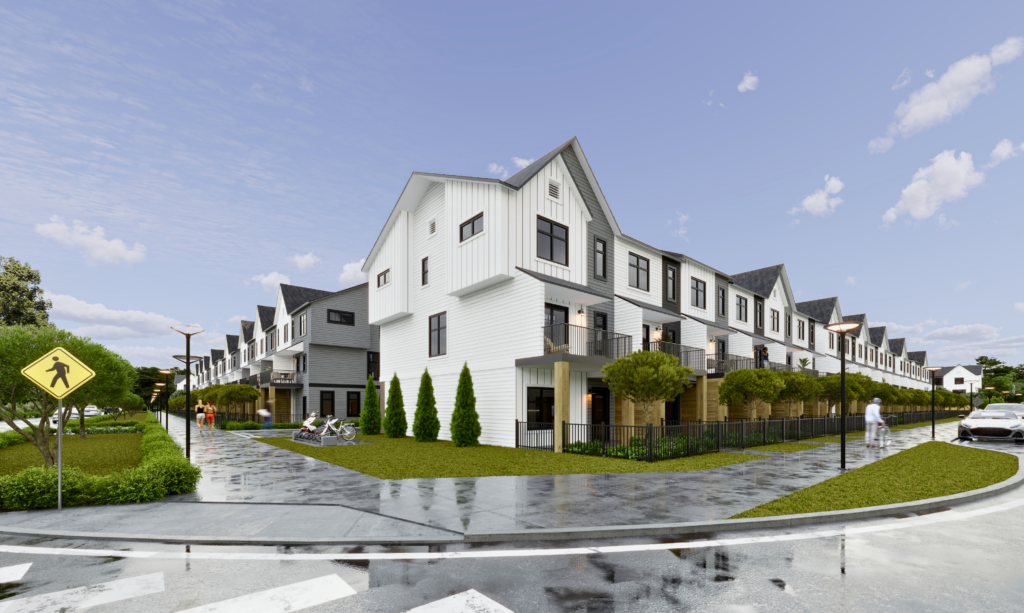
For many, the strategic entry point is the missing middle: modern townhomes. With a median price of around 420,000 dollars, townhomes allow buyers to enter the market without becoming house poor. The goal is to find a home that offers functional space, such as side-by-side construction where no neighbors live above or below you, at a price point that leaves room in your budget for life outside of mortgage payments.
This is precisely where builders like Kalamoir Homes have positioned their approach. Instead of shrinking layouts to hit a price point, the focus is on delivering a single-family feel within a townhome footprint. That means prioritizing privacy, efficient floorplans, usable outdoor space, and attached garages while keeping the overall purchase price within reach of first-time buyers. The strategy is not to compete with detached homes on size, but to compete on smart design and value per dollar.
Managing the Risk of Hidden Costs
One of the most common pitfalls for first-time buyers is choosing an older resale home because of its lower purchase price, only to experience what many call the First Year Shock. The home may look like a great deal on paper, but what is not immediately visible can become expensive once you move in. In Calgary’s extreme climate, long winters and rapid temperature changes put significant strain on major home systems.
An aging furnace, roof, windows, or plumbing system may pass inspection, yet still be nearing the end of its lifespan. When these essential components fail, replacements are not cosmetic upgrades. They are urgent and costly repairs that can run into the thousands or even tens of thousands of dollars. For buyers already stretching their budget to secure a mortgage, these unexpected expenses can create serious financial stress.
The Kalamoir Homes approach addresses this risk by focusing on new construction backed by warranty protection and durable exterior materials suited for Alberta’s climate. Rather than treating siding, roofing, and building envelope materials as aesthetic decisions, they are treated as long-term performance components. This emphasis on durability and predictable operating costs shifts the focus from initial sticker price to total cost of ownership over the first decade.
The Safety Net: Alberta New Home Warranty
New construction addresses this risk through legislated protection. In Alberta, the New Home Warranty provides a tiered shield that is essential for early-year financial predictability:
- 1 Year: Materials and Labour
Covers the interior fit and finish, including flooring and fixtures. - 2 Years: Delivery and Distribution Systems
Protects the plumbing, electrical, and heating systems—your primary defense against Calgary winters. - 5 Years: Building Envelope
Covers the roof and windows, which is critical in a city prone to heavy hailstorms and wind. - 10 Years: Major Structural Components
Provides a decade-long guarantee on the foundation and framing.
The Impact of Modern Construction Standards
Beyond the warranty, the actual materials used in a home dictate your monthly overhead. Calgary buyers should pay close attention to the “Building Envelope.” Exterior materials and building envelope components should be evaluated based on durability and performance in Alberta’s climate.
New construction homes must meet current provincial building code requirements, which are updated periodically to reflect improved safety, efficiency, and performance standards compared to older housing stock.
Sustainability and Community Infrastructure
A common oversight for first-time buyers is focusing solely on the home itself and forgetting that every property exists within a larger neighborhood ecosystem. A house may be affordable and visually appealing, but if it is located in a community without year-round amenities, accessible green space, or thoughtful planning, it can lead to lifestyle isolation. Over time, limited walkability, few gathering spaces, and long drives for basic services can reduce both daily convenience and overall satisfaction.
In a city like Calgary, community infrastructure plays an even greater role because of the climate. Winters are long, temperatures are extreme, and outdoor activity is not always practical for several months of the year. Neighborhoods designed with infrastructure-first planning prioritize connectivity, recreation, and essential services from the beginning rather than as an afterthought.
Livingston in NE Calgary is often cited as a model for this approach. With centralized amenities and integrated community spaces, residents have access to safe, accessible indoor facilities close to home. In this context, nearby recreation and gathering spaces are not luxuries. They are essential components of a sustainable, livable community.
The Year-Round Solution: The Livingston Hub
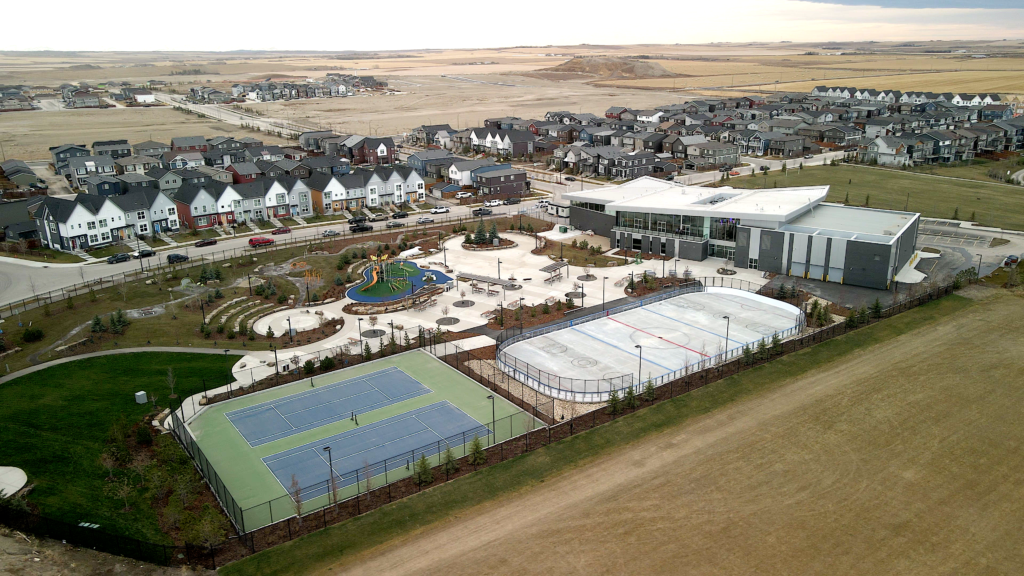
Managed by the HOA, the Livingston Hub is a 35,000 square foot central facility designed to address what many Calgary residents call the Winter Factor. In a city where winter can stretch for months and temperatures can drop dramatically, access to reliable indoor and maintained outdoor amenities is not simply a bonus feature. It is a practical necessity for maintaining an active and connected lifestyle.
It provides:
• Indoor gymnasiums and courts for year-round physical activity when temperatures are too cold for outdoor parks. Families, children, and adults can stay active without needing to commute across the city for recreation.
• Skating rinks and maintained winter trails that encourage outdoor engagement even during colder months. Because these amenities are professionally maintained, residents can rely on safe and accessible spaces throughout the season.
• Strong connectivity through immediate access to major routes such as Stoney Trail and Deerfoot Trail, ensuring that while the neighborhood fosters its own sense of community, residents remain efficiently connected to downtown Calgary, employment hubs, schools, and retail centers.
By combining centralized amenities with strategic infrastructure planning, the Livingston Hub reinforces the idea that community design should support residents in every season, not just during the summer months.
Strategic Decision: Managed vs. Self-Managed
Another important consideration for first-time buyers is understanding who is responsible for ongoing maintenance. Detached homes offer full autonomy and control, but that independence also comes with complete responsibility. Homeowners must manage snow removal, lawn care, exterior repairs, and long-term replacements such as roofing and siding. These tasks require both time and a dedicated maintenance budget.
For many younger families, especially those balancing careers and childcare, this level of responsibility can feel overwhelming. Weekend hours often shift from rest and recreation to yard work and seasonal upkeep. In addition, large capital expenses such as roof replacement or exterior upgrades must be planned and funded independently, which can create financial pressure if not carefully reserved for.
As a result, many buyers are gravitating toward managed townhome communities where exterior maintenance, landscaping, and snow removal are handled collectively. This shared approach not only protects the visual consistency and resale value of the community but also allows homeowners to reclaim their time while benefiting from professional oversight and predictable maintenance planning.
Frequently Asked Questions
Is 2026 a good time to buy in Calgary
Market conditions fluctuate, but Calgary continues to see steady demand driven by population growth and relative affordability compared to other major Canadian cities. Buyers should focus on long-term sustainability rather than short-term timing.
Are townhomes a good option for first-time buyers
For many buyers, yes. Townhomes often provide more space than condos and lower maintenance responsibilities than detached homes, making them a practical middle ground.
What is the biggest mistake first-time buyers make
Underestimating maintenance costs. Focusing only on mortgage qualification without budgeting for repairs, utilities, and long-term upkeep can create financial strain.
Does the Alberta New Home Warranty cover everything
No warranty covers normal wear and tear, but it provides structured protection for materials, systems, building envelope, and structural components over a defined timeline.
Why does community infrastructure matter so much in Calgary
Because of Calgary’s long winters and urban layout, having accessible recreation, maintained pathways, and proximity to major routes significantly affect daily quality of life.
Choosing Predictability Over Uncertainty
The smarter way to buy in Calgary in 2026 is to prioritize predictability.
By choosing a home with legislated warranty protection, modern energy-efficient materials, and placement in a community designed for year-round living, you reduce financial surprises and improve long-term stability.
For buyers researching options in northeast Calgary, communities like Livingston provide a strong example of infrastructure-first planning.
If you want to review modern townhome layouts within Livingston, you can explore Kamira at Livingston here:
https://kamiraliving.ca/
To compare available designs and see how three-bedroom layouts with private yards function for families, visit the floorplans page:
https://kamiraliving.ca/#floorplans
If you would like to ask questions or schedule an educational consultation, you can connect through the contact page:
https://kamiraliving.ca/#contact
Buying your first home is not about chasing trends. It is about building a foundation that supports your financial and family life for years to come.

